
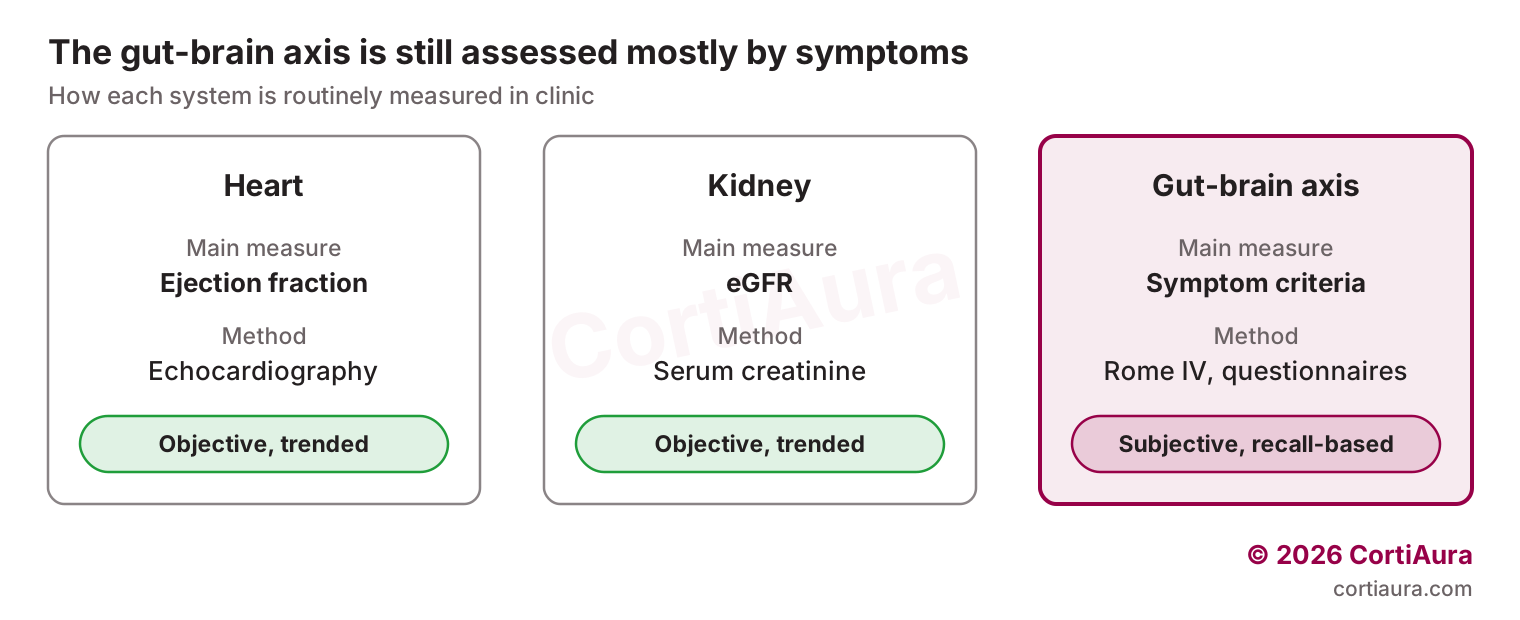
In clinic, a patient's ejection fraction is reported to the nearest percentage point and their eGFR is trended across years. Their gut-brain function is often summarised in a single line: "stress-related."
That asymmetry is not a reflection of biology. It reflects where we have invested in measurement. As a gastroenterologist, I think gut-brain axis measurement deserves the same discipline we give the heart and the kidney, and that doing so would change diagnosis, treatment and research at the same time.
Why the gut-brain axis was left behind
Cardiology and nephrology spent decades building cheap, repeatable, objective measures: echocardiography, ECG, serum creatinine and eGFR. Gut-brain medicine has largely relied on symptom criteria and questionnaires, which tell us how a patient feels rather than how their autonomic system is behaving.
The scale of the gap matters. The Rome Foundation now classifies these conditions as disorders of gut-brain interaction (DGBI) [1]. Its global study of 73,076 adults in 33 countries found that more than 40% of internet survey respondents met Rome IV criteria for at least one DGBI, as did about 21% of those interviewed in person [2].
Guidelines are already clear that IBS should be a positive diagnosis, not a diagnosis of exclusion. NICE states that colonoscopy is not necessary to confirm IBS in people who meet the diagnostic criteria [3], and the British Society of Gastroenterology guideline takes the same position [4]. A Danish randomised trial found a positive diagnostic strategy was non-inferior to a strategy of exclusion [5].
Practice has not fully caught up. In one US survey, only 8% of IBS experts regarded IBS as a diagnosis of exclusion, compared with most community providers, and that belief was associated with more testing [6]. Without an objective physiological marker to anchor a positive diagnosis, many clinicians still reach for another endoscopy.
What we can measure today, and its limits
Heart rate variability (HRV) is the most practical starting point. Measurement standards were set by a joint European and North American cardiology task force in 1996 [7]. Indices such as RMSSD and high-frequency power are widely used to index cardiac vagal tone, the parasympathetic contribution to heart rate regulation [8].
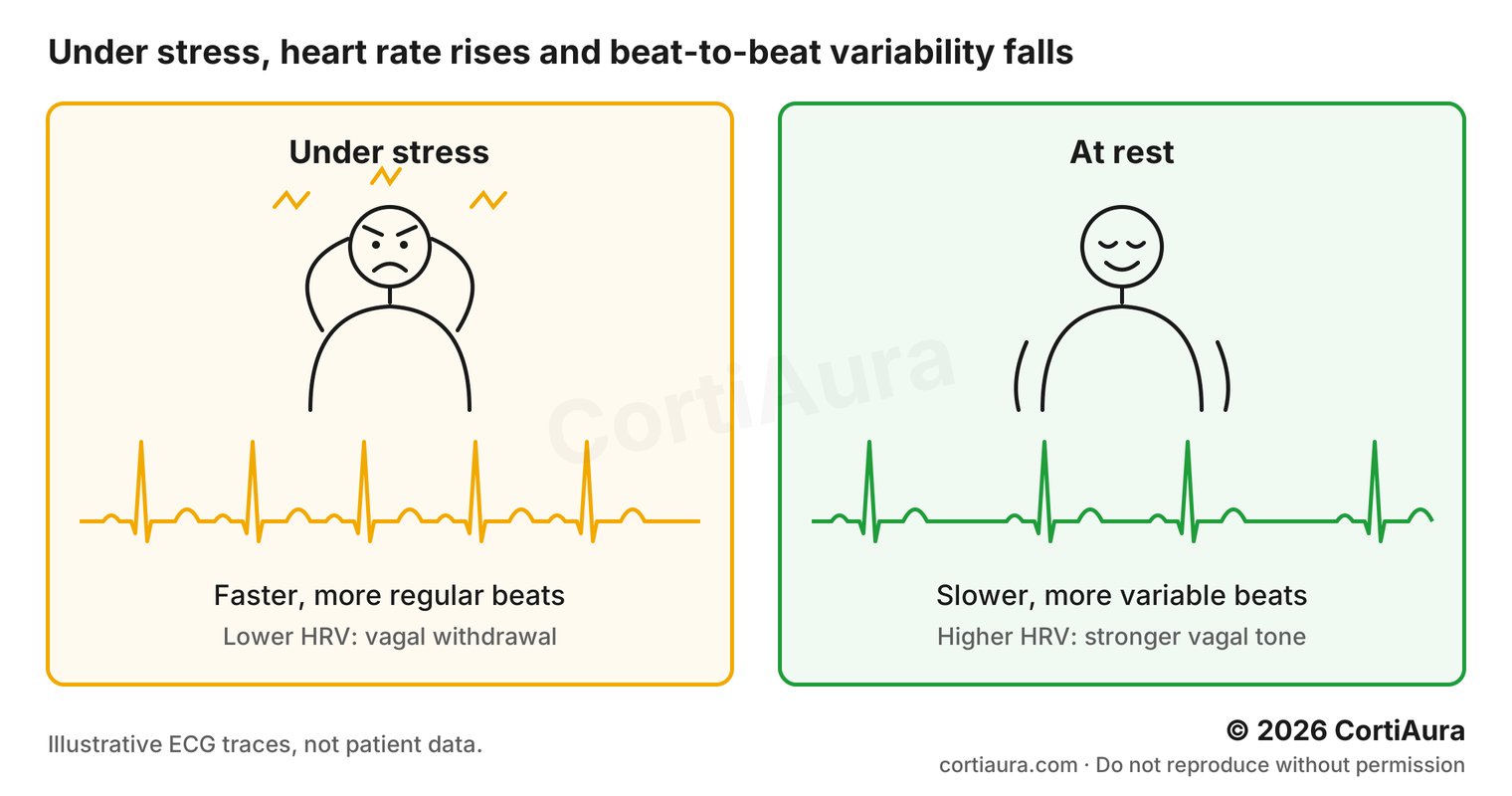
HRV is not a direct readout of gut-brain function, and it should not be presented as one. Breathing pattern, physical activity and beta-adrenergic tone all influence it, and differences between individuals are harder to interpret than changes within one person [9]. Protocols for recording, posture, time of day and analysis need to be standardised before values can be compared across sites [8].
The evidence in IBS reflects this. A review of HRV studies found that most showed no overall difference between IBS and healthy controls. Differences emerged in subgroups defined by bowel habit, severity and psychological comorbidity [10].
That is an argument for better measurement, not against it. It suggests autonomic dysfunction is relevant to a subset of patients, and we currently have no routine way to identify who they are.
What changes once we measure properly
If autonomic measures were recorded with the same discipline as ejection fraction or eGFR, four things could change.
- Baselines that can be trended. Standardised HRV-derived indices could become a reading a clinician tracks over months, rather than a one-off number from a research protocol.
- Support for a positive diagnosis. An objective physiological marker would give clinicians confidence to follow guideline-recommended positive diagnosis, rather than ordering another negative endoscopy.
- Faster read-outs of treatment response. Within-person change is where HRV is most interpretable [9]. That makes it suited to showing within weeks whether an intervention is shifting autonomic balance, alongside symptom scores.
- Firmer ground for regulators and payers. Health systems fund what can be measured and audited. Objective, repeatable measures make a stronger case than symptom recall alone.
None of these replaces clinical judgement or patient-reported symptoms. They add a physiological layer that gut-brain medicine has largely lacked.
Implications for research
Trials in this field are built almost entirely on patient-reported outcomes. The FDA's IBS guidance defines responders by improvement in abdominal pain and stool frequency or consistency [11]. The Rome IV recommendations likewise base the primary analysis on a responder definition or a clinically meaningful change in patient-reported symptoms [12].
That is appropriate, because symptoms are what patients care about. But symptom endpoints alone make it hard to show how a treatment works, or which patients it works for. This matters especially for neuromodulation, where the proposed mechanism is autonomic.
Standardised autonomic measures recorded as secondary or mechanistic endpoints would help. They could stratify patients at entry, test whether a treatment engages its target, and give trial designers something harder to argue with than a symptom diary alone.
Conclusion
The gut-brain axis is not inherently unmeasurable. It has simply had far less measurement built around it than the heart or the kidney.
The tools we have, led by HRV, are imperfect and must be used with honest caveats. That does not make the problem unsolvable.
The gap is an engineering and evidence problem, not a biological one, and it is one we can solve.
With between one in five and four in ten adults meeting criteria for a disorder of gut-brain interaction, depending on how they were surveyed [2], it is worth solving.
To follow this work as it develops, join our Founding Community. You can also read more about the gut-brain axis and what the vagus nerve does.
Frequently asked questions
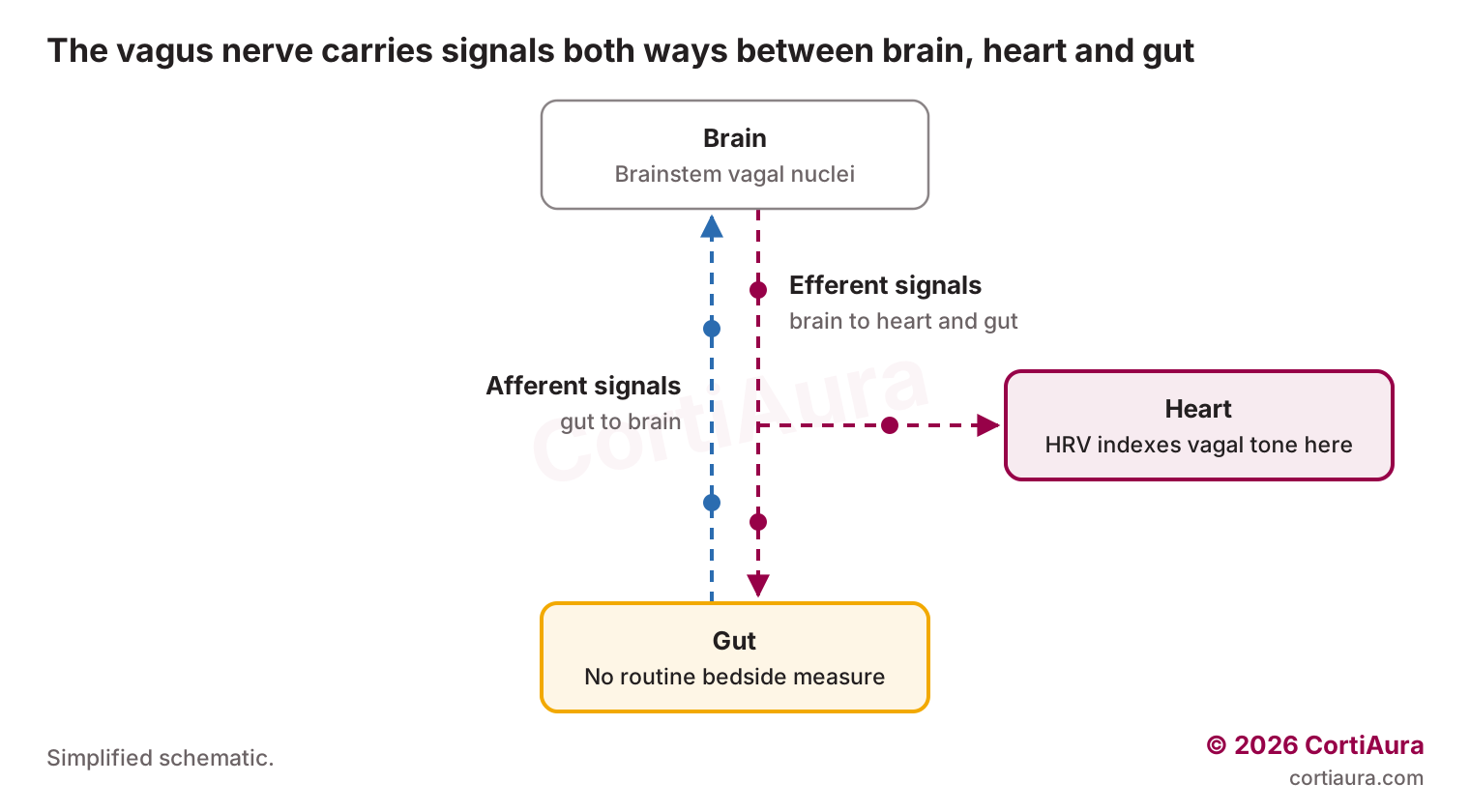
What is the gut-brain axis? The gut-brain axis is the two-way communication network between the digestive system and the brain. The vagus nerve is one of its main pathways, carrying signals from the gut to the brain and from the brain to the heart and gut.
Is IBS a diagnosis of exclusion? No. NICE and British Society of Gastroenterology guidance recommend a positive diagnosis based on symptoms, with limited tests, in people without red-flag features [3, 4].
Can heart rate variability measure gut-brain function? Not directly. HRV indexes cardiac vagal tone, which is one part of autonomic function [8]. It is a practical starting marker, but breathing, activity and other factors influence it [9].
Why does objective measurement matter for gut-brain disorders? Objective measures can support a positive diagnosis, track treatment response over time, and give trials and health systems data they can audit.
Declaration of interest: The author is the founder of CortiAura, a company developing vagus nerve technology. This article is educational and makes no claims about any product.
References
- Drossman DA, Hasler WL. Rome IV—Functional GI disorders: disorders of gut-brain interaction. Gastroenterology 2016;150(6):1257–1261.
- Sperber AD, Bangdiwala SI, Drossman DA, et al. Worldwide prevalence and burden of functional gastrointestinal disorders, results of Rome Foundation Global Study. Gastroenterology 2021;160(1):99–114.e3.
- NICE. Irritable bowel syndrome in adults: diagnosis and management (CG61), 2008, updated 2017.
- Vasant DH, Paine PA, Black CJ, et al. British Society of Gastroenterology guidelines on the management of irritable bowel syndrome. Gut 2021;70(7):1214–1240.
- Begtrup LM, Engsbro AL, Kjeldsen J, et al. A positive diagnostic strategy is noninferior to a strategy of exclusion for patients with irritable bowel syndrome. Clinical Gastroenterology and Hepatology 2013;11(8):956–962.
- Spiegel BMR, Farid M, Esrailian E, Talley J, Chang L. Is irritable bowel syndrome a diagnosis of exclusion? A survey of primary care providers, gastroenterologists, and IBS experts. American Journal of Gastroenterology 2010;105(4):848–858.
- Task Force of the European Society of Cardiology and the North American Society of Pacing and Electrophysiology. Heart rate variability: standards of measurement, physiological interpretation and clinical use. Circulation 1996;93(5):1043–1065.
- Laborde S, Mosley E, Thayer JF. Heart rate variability and cardiac vagal tone in psychophysiological research. Frontiers in Psychology 2017;8:213.
- Grossman P, Taylor EW. Toward understanding respiratory sinus arrhythmia: relations to cardiac vagal tone, evolution and biobehavioral functions. Biological Psychology 2007;74(2):263–285.
- Mazurak N, Seredyuk N, Sauer H, Teufel M, Enck P. Heart rate variability in the irritable bowel syndrome: a review of the literature. Neurogastroenterology and Motility 2012;24(3):206–216.
- US Food and Drug Administration. Irritable bowel syndrome — clinical evaluation of drugs for treatment, 2012.
- Irvine EJ, Tack J, Crowell MD, et al. Design of treatment trials for functional gastrointestinal disorders. Gastroenterology 2016;150(6):1469–1480.
© 2026 CortiAura. Text and illustrations may not be reproduced without permission.
This article is for general information only and is not medical advice. If you have symptoms that concern you, speak to your GP.